RV Interior Detailing: How I Deep Clean a Coach in One Day
By Bev Lindqvist · October 21, 2026
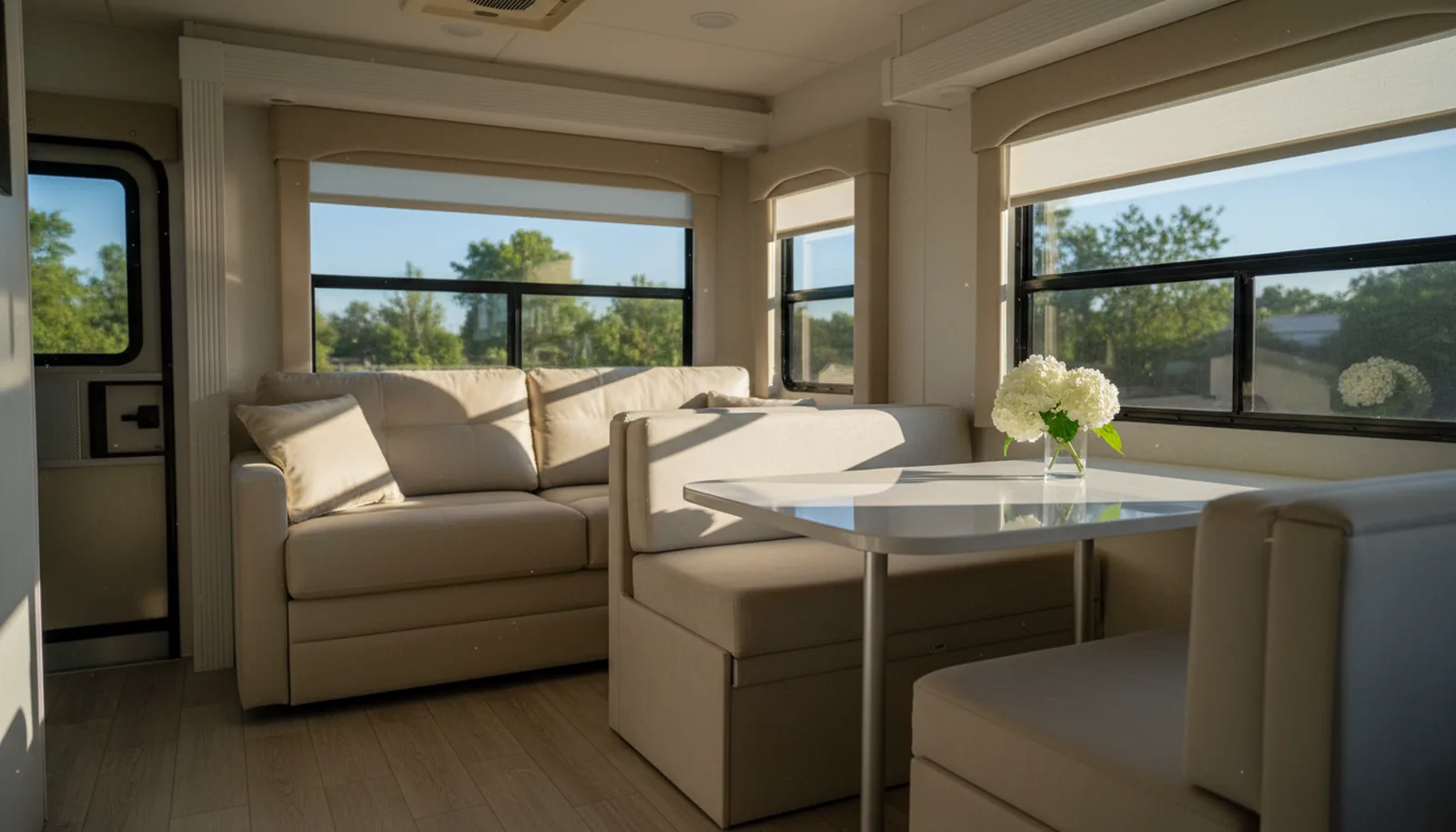
The April sun was already hot on my back when I got the hose out in the St. George driveway. Annual deep clean day, my one big RV interior detailing push before we point the coach north for the summer, and I wrote the date on the calendar in January so I couldn’t “forget.” Last year I found a dried cranberry juice spill under the dinette, soaked all the way into the carpet pad, from a trip nine months earlier, and I wished I’d hired one of the RV detailers in Las Vegas to handle it. Nine months. That’s what happens when you only do a real clean once a year. I’m retired from dental hygiene and now write for my blog at rvdetailing.org, and the question readers ask most is wether to hire an RV detailer in Las Vegas or do it themselves. Here’s my one-day plan for the interior, with the times straight out of my cleaning log.
I have lived full-time in a 40-foot Class A for six years, same coach the whole time, and I do every inch of that interior myself.
Start by Ventilating and Emptying the Rig
Everything open first. Windows, roof vents, the door. All of it, befor I pick up a sponge.
While the coach airs out I strip the bed and run the bedding to the park laundry or the house washer. This also scares out dust and cobwebs before they drift down onto the sofa and the floor. Prep takes me 30 minutes, including the trip to the laundry room.
One caution. Keep water away from electrical outlets and the slide mechanism. I tape plastic over the outlets by the dinette before anything gets sprayed. It feels fussy. But a wet slide motor costs a lot more than three minutes of painter’s tape.
Top-Down Dusting: Ceiling, Vents, Fans and Shades
Coach ceilings collect a fine dust you never notice until it lands on your head.
The bathroom and kitchen fan blades get a spray of mild all-purpose cleaner and a wipe. For the pleated day-night shades, I lower them all the way and run a dry microfiber mitt over every fold. I do not get the fabric wet. The shade mechanism don’t like moisture one bit.
Forty-five minutes for this section. The air allready smells better when I’m done. Then on to upholstery, which I put off as long as I can every single year.
Upholstery: Fabric, Vinyl and Leather Need Different Moves
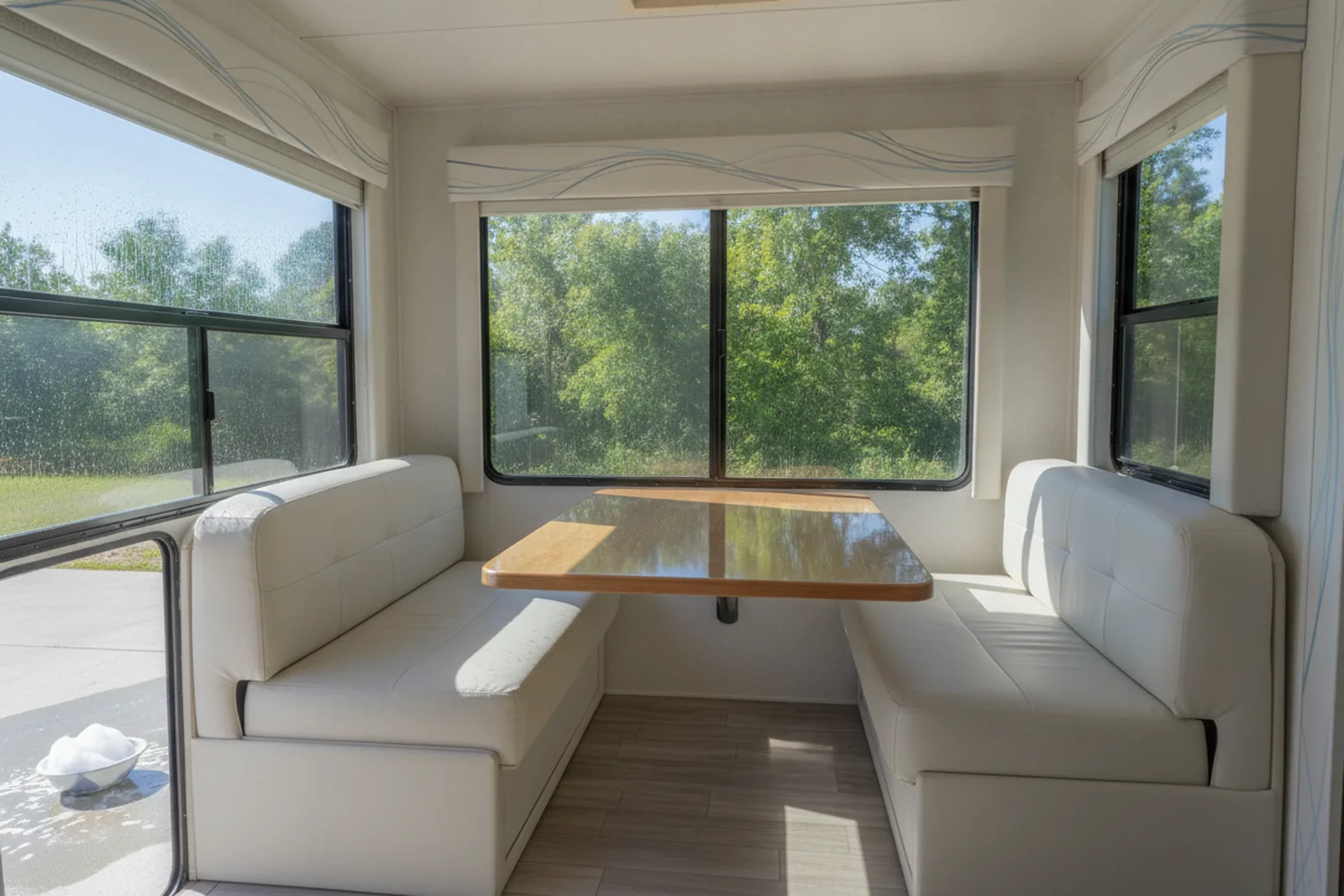
My coach has a little of everything. Two fabric recliners, a vinyl dinette booth, leatherette on the captain’s chairs.
One cushion at a time, and you don’t get the foam inside wet. It takes days to dry and then it molds. For the vinyl and leatherette I use a vinyl cleaner and a soft rag, never a scrub pad. Wipe with plain water after, then dry. A light vinyl protectant goes on the driver’s seat only, because that’s the one the windshield sun bakes all day.
Budget 40 minutes. If you find a stain and you cant even guess what it was, the post on 10 RV interior cleaning hacks I actually use as a full-timer has my tricks for mystery spills.
Hard Surfaces: Countertops, Cabinets and the Never-Ending Dust
I keep two separate cloths for this part. One for the solid-surface counters, one for the laminate cabinet doors and I do not mix them up.
The galley takes 30 minutes, and that includes moving the coffee maker and the toaster back and forth. No polish or oil on the wood. It leaves a film that grabs dust. A clean dry cloth buffs the doors just enough.
My favorite tool lives in the junk drawer: a small paintbrush. I use it on the window tracks and the crevice around the slide seals. It gets where no cloth can.
Kitchen Appliances and the Bathroom: Where the Real Grime Lives
Kitchen appliances first, inside and out, because the kitchen sink is where I dump the bucket. Then the bathroom.
The bathroom in my coach is 4 feet by 6 feet, no bigger than a closet, and it takes me almost a full hour. Nobody believes that until they do it themselves.
Here’s my printable checklist for the whole day.
- Open all windows and vents, remove loose gear and bedding
- Dry-dust ceiling, vents and fan blades; wash vent covers
- Wash and dry overhead shade fabric with a microfiber mitt
- Vacuum all upholstery; spot-test cleaner on a hidden seam
- Clean fabric cushions with a damp (not wet) cloth; air-dry in shade
- Clean vinyl and leatherette with vinyl cleaner and a soft rag; protect driver seat
- Wipe countertops with mild cleaner; damp-wipe cabinet faces top to bottom
- Steam-clean microwave; empty fridge bins and wash them; degrease stovetop
- Scrub shower with vinegar mix; wipe toilet with dedicated cloth; clean floor drain
- Vacuum all floors; mop vinyl plank with damp microfiber; shampoo rugs if needed
- Clean windows with vinegar solution; vacuum window tracks with brush attachment
- Do a smell check: sniff the sofa, under the dinette, and inside the bathroom cabinet; treat any odor with an enzyme cleaner
Safety note. Never mix bleach and ammonia cleaners. The fumes can knock you flat. And if you use an ozone generator, run it only in an unoccupied RV and follow the maker’s directions to the letter.
Floors, Windows and the Odor Check
The vinyl plank floor gets vacuumed with the wand, then mopped with a microfiber cloth dampened in plain water. No soap. Soap leaves residue and then the floor looks streaky. For carpeted spots I check my post on 10 places dirt hides in an RV that a quick clean always misses for the spots I used to skip, like under the slide room flap.
Windows come last because overspray from everything else has settled on them by then.
Then I walk the whole coach and sniff. Sofa, under the dinette, inside the bathroom cabinet. Anything musty gets an enzyme cleaner on that exact spot, and I let it dry and check again the next morning. That sniff test is what caught the cranberry juice last year. The odor was so faint I almost talked myself out of pulling the carpet. But I did, cut out the wet pad, and let the floor dry for two days. Better than a mold problem in July.
RV Interior Detailing: What I’d Pay a Pro to Do
After six years I know which jobs pay me back in time and which ones punish my knees. If your in Nevada, pull up a list of RV detailers across Nevada and ask for an interior quote.
I still do the annual deep clean myself because I want to find the hidden spills and the dust in the tracks myself. It’s not the money. It’s the knees, actualy, and I’ve just learned which ladder and which bucket setup keeps me off them as much as possible. But there are days now when I look at the stiff brush and genuinely wonder.
And while we’re on it. A mobile detailer may suggest an ozone treatment for stubborn smells. Ozone generators should be run only in an empty, closed rig, with a good air-out afterward. Ozone irritates the lungs. Follow the maker’s directions, the timed ones, exactly.
If you want to see the whole process in action, this video walks through cleaning an RV inside and out.
The One Mistake I Still Make and a Test for Your Own Rig
Every April I tell myself I’ll start the deep clean a day early. Every April I am still hauling the mattress out at 7:00 a.m. In my pajamas.
So here’s a small test for this weekend if you have a coach or trailer. Pull the cushions off the dinette and the sofa. Run your hand along the seam where the fabric meets the frame. If it feels at all sticky or gritty, somthing spilled. Treat it now, not after a year of baking in.
If you’d rather not spend a day on a ladder and your knees, mobile RV detailers are a phone call away. Ask two or three for a written per-foot quote on the same interior detail, and compare what each one includes in a “deep clean.” That comparison is worth more than any ten blog posts.
Before you grab the buffer
FAQ
How much does RV interior detailing cost?
Prices vary by rig size, condition and region. One detailer charges about $17 per linear foot, while flat rates in Central Florida run from about $200 to $600 for an interior-only deep clean. A full detail on a 30- to 45-foot Class A often lands between $600 and $1,200 or more. Always get a written quote with what's included.
Can I use bleach to clean the inside of my RV?
Bleach can be used in small amounts for mold or mildew on hard, non-porous surfaces, but never mix it with ammonia or other cleaners. The fumes are dangerous and can be deadly. Ventilate well and rinse thoroughly. For everyday cleaning, a mild soap or a dedicated RV interior cleaner is safer and easier on your surfaces.
How often should I deep clean the interior of my RV?
I do a full deep clean once a year, in the spring before we head out, plus quick cleans every two weeks when we're on the road. If you have pets or kids, or if you cook a lot, do it twice a year. The key is catching spills and dust before they become stains, so a monthly check under the dinette and sofa is a good habit.
What's the best way to remove odors from RV upholstery?
Start by vacuuming and airing out the fabric. For a musty smell, mix mild soap in warm water, dampen a cloth, and wipe the fabric; don't soak the foam. If the odor persists, use an enzyme cleaner made for pet or food odors. For extreme cases, an ozone generator used in an empty, closed rig can help, but air it out before anyone goes inside.
Can I steam clean the carpet in my RV?
You can, but be very careful not to over-wet it. The subfloor is often wood, and too much water can warp or rot it. Use a machine that extracts most of the water, and run fans or open windows to dry the carpet completely within 24 hours. I shampoo my rugs outdoors and only spot-clean the carpet in the coach.
What's the fastest way to clean RV window tracks?
The window tracks collect dust, hair and little crumbs. I vacuum them with a small brush attachment, then use a damp microfiber wrapped around a screwdriver to get into the corners. Dry with a clean cloth, and optionally apply a tiny bit of silicone spray to keep the window sliding smoothly. This takes me abotu two minutes per window.
Is it safe to use an ozone generator in my RV?
Ozone is an irritant and can harm lungs, so only run an ozone generator in an empty, closed RV, and follow the manufacturer's directions for time and ventilation. After the cycle, open all windows and doors and air the rig out for at least an hour before you go inside. Ozone can also damage some plastics and electronics, so use it cautiously.
Find RV detailers near you
Compare RV detailers and mobile washes in your city, then ask a few for a price.
Browse by state