RV Detailing Supplies: The 12 Things in My Kit, by Category
By Bev Lindqvist · October 21, 2026
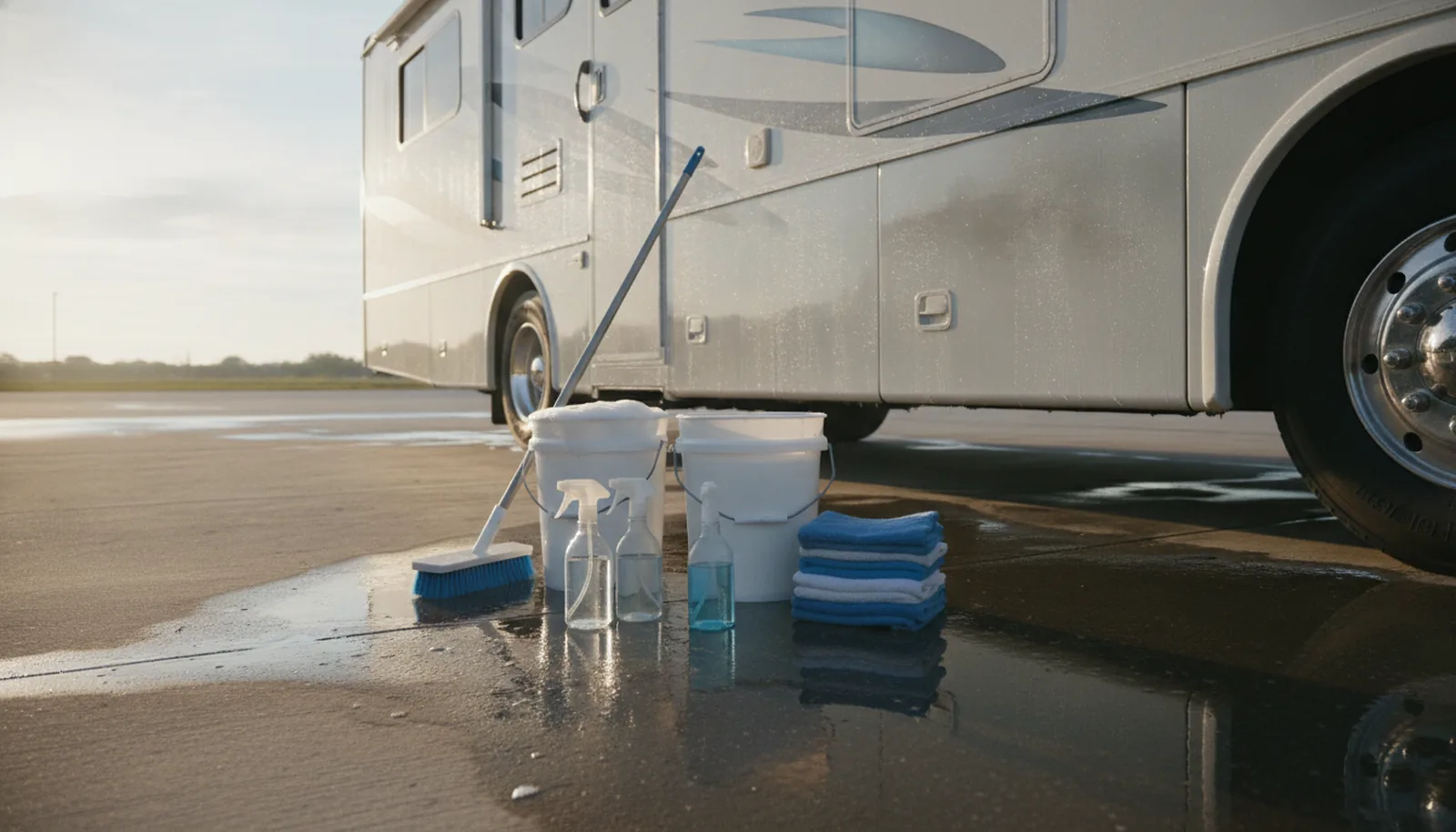
It was 6 a.m. At a dusty fairgrounds outside Quartzsite. I was on my wheeled platform, scowling at a fresh scratch near the entry door. I’d tried to save twenty bucks on a wash brush and the bristles were too stiff for gelcoat. That’s a mistake I warn people about when they ask about RV detailers in Reno. That was the morning I admitted my cleaning kit has a few non-negotiables and everything else is just cargo in my bay. My coach is a 2015 40-foot diesel Class A and after six years of washing it myself, I can tell the real RV detailing supplies from the junk that just takes up space. If your near Reno and not up for the ladder work, there are solid RV detailers in Reno who can take over. But if you’d rather do it yourself, here’s what I actually keep.
1. Two buckets with grit guards
One soap bucket, one rinse bucket, each with a plastic grid in the bottom so grit settles below the grid and doesn’t get scrubbed back onto the paint. I fill them halfway or my back complains by the third panel. Clean water matters more than fancy soap. The single-bucket shortcut left fine scratches on my front cap in the desert sun, and I saw every one of them at sunset for a month.
2. PH-neutral RV wash soap
Dish soap strips wax and dries out sealant, so the soap I keep is labeled pH-neutral and made for RVs or boats. I used dish soap on my old travel trailer and the chalk came right back. A stronger degreaser is roof only, and even then I test a small spot first. One capful per bucket is plenty. If it suds like a bubble bath, it’s too strong.
3. Soft long-handled brush with a flow-through head
The brush that scratched my window taught me to check bristle softness before I hand over my card. Now I use one with flagged tips, not stiff nylon. The flow-thru head lets soap run from a hose through the handle so I’m not dipping and dripping up and down the ladder. I stand on a platform, not the ground, and clean top to bottom. For the full process, see my post on how to wash an RV without stripping the wax or flooding the seals.
4. Microfiber towels sorted by job
Blue for glass, yellow for drying, white for waxing. A good microfiber picks up dirt instead of smearing it around. I wash them in hot water with no fabric softener, then line-dry them in the coach. Keeping a stock of 24 costs me about $40 a year. Cheap ones shed lint on windows, which I learned on a windy day in Wyoming with a black coach parked next to me and lint everywhere.
5. Membrane-specific roof cleaner
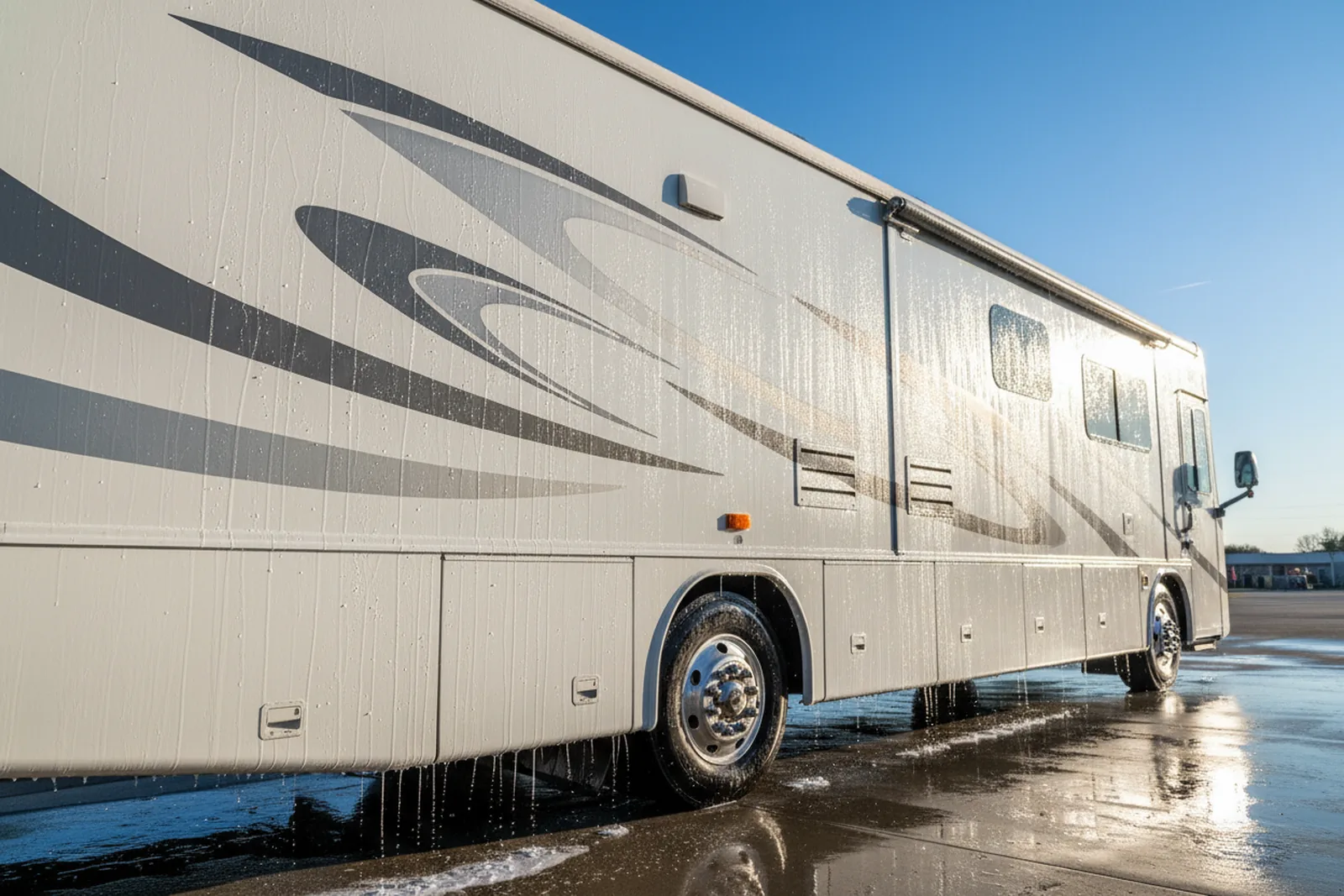
My roof is TPO and the membrane maker’s care sheet is blunt: no petroleum distillates, no acetone, no citrus. So my roof cleaner is labeled for TPO or EPDM and I read the label every single time to be sure. A wrong cleaner can void the roof warranty. I scrub 2-foot squares with a medium-bristle brush, then rinse the sidewalls so I don’t end up with cleaner streaks running down the awning arms. It’s a job I hate. I do it twice a year and gripe the whole time.
6. Black streak remover safe for gelcoat and decals
Rain off the roof leaves dark lines down the sides, and my streak remover is made for RV fiberglass, not a kitchen cleaner. Kitchen sprays strip wax and they’re too harsh for decals. I spray it on a rag, not the wall and work a 3-foot section at a time. Long hot waits make streaks set into the gelcoat. For the full routine, read my post on how to remove black streaks and stop them coming back.
7. Bug and tar remover
Bug splatter on the nose cap bakes hard in desert heat, so my bug remover is a gel that clings, not a spray that runs down the cap and dries before it works. I let it sit two minutes, then wipe with a wet microfiber. Tar from road work gets the same treatment. Don’t use a stiff brush or you’ll etch the gelcoat. I clean bugs off every fill-up day. Otherwise it becomes a geology project.
8. Cleaner wax or synthetic sealant
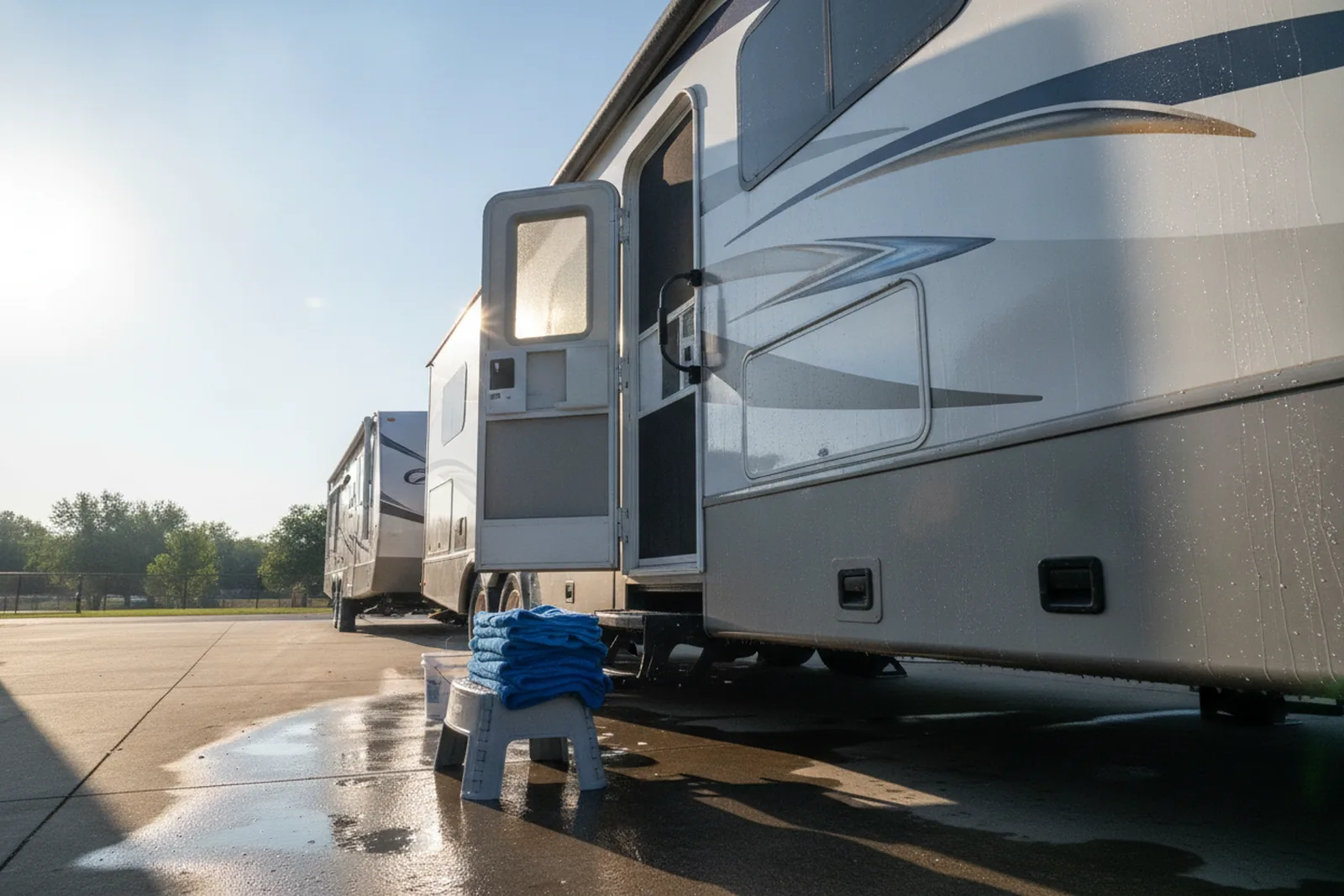
A cleaner wax has a mild abrasive to lift light oxidation plus wax to protect. I use it by hand in the spring and fall. A synthetic sealant lasts longer, maybe 6 months in Arizona sun, but it doesn’t clean as it protects. I pick based on how chalky the walls look when I wipe a towel across them. If the towel comes away white, I need cleaner wax first.
9. Dual-action polisher and pads
My arms gave out after hand-waxing a 40-footer six years ago, which is when I bought the dual-action polisher. It’s random-orbit, so it’s harder to burn through clear coat than a rotary. I use foam pads: orange for compounding, white for polish, black for wax. I own three pads of each. A wool pad on gelcoat is too aggressive for my skill level. This tool saves me about 8 hours per wax job, which is a full day I can spend doing somthing else.
If you want to see some of these products in action, this video tests a bunch of RV cleaning products.
10. Glass cleaner safe for tint and lenses
Ammonia eats window tint and fogs plastic headlight lenses. My glass cleaner is ammonia-free and safe for both. I spray it on a blue microfiber, not the glass, to avoid drips on the rubber seals. Windows get done last, after the body, so I’m not cleaning off overspray. Streaks on the windshield at sunset are a safety issue.
11. Rolling platform or sturdy ladder
A 7-foot A-frame ladder is fine for the roof line, but a rolling platform keeps me stable along the long sidewalls. Mine has a tool tray and a place to hang a bucket. I lock the wheels or the whole thing drifts when I lean. Falling off a ladder is not a detailing technique. I’ve still got a scar on my shin from a cheap step stool collapsing under me in 2019.
12. Soft water or a spot-free rinse option
Hard water leaves white mineral spots that eat into wax. My final rinse is deionized water from a filter I attach to the hose. It costs about $30 per wash in resin. If I skip it, I dry with a chamois immediately, panel by panel. In Quartzsite the water is so hard it would make a rock blush. Spot-free rinse is worth the money on a dark-colored coach.
What I’d tell my younger self about this kit
Buy the right brush the first time, not the third. I wasted maybe $200 on cheap microfiber, stiff bristles, and a soap that stripped my wax in one wash. Cheap supplies are expensive because they cost you your finish. Cheap supplies are expensive becuase they cost you your finish. If you’re not sure, do the towel test this weekend: wipe a dry, clean microfiber across a sidewall in the shade. If it comes away with white chalk, you need compound, not just wax. Then spend the money once. If the whole job feels too big, pull up RV detailers across Nevada and ask two of them for a written per-foot quote on the same wash-and-wax job befor you swallow the ladder yourself.
Keep reading
FAQ
What is the most important RV detailing supply?
A pH-neutral RV wash soap. Harsh soaps, like dish detergent, strip wax and dry out decals and sealant. Everything else builds from a clean surface. I keep one bottle in my bay and one at home, because running out mid-rinse is a three-trip week.
Can I use car detailing supplies on my RV?
Some, like microfiber and pH-neutral wash, transfer fine. But RVs have roof membranes, decals, and gelcoat that need specific chemistries. Read every label for the surface you're cleaning. I use marine fiberglass supplies on my sidewalls and TPO-safe cleaner on my roof.
How do I detail an RV roof safely?
Check you're roof type first: EPDM, TPO, fiberglass, or aluminum. Use only cleaners made for that membrane. Work in small sections with a soft, medium-bristle brush. Rinse sidewalls to prevent streaks. Never pressure-wash the roof; no membrane maker approves it. If the roof isn't walkable, call a pro.
How often should I wax my RV?
Most RV makers say every 3 to 6 months for a rig stored outside in sun. I do a cleaner wax evry spring and fall and a spray sealant after every third wash. The towel test tells the truth: if a clean microfiber comes away white, the gelcoat needs attention.
What removes black streaks without harming decals?
A black-streak remover labeled safe for gelcoat and decals is the safest. Spray it on a rag, not the wall. Work in 3-foot sections. Avoid kitchen and bathroom cleaners; they strip wax. For stubborn stains, see my streak-removal post.
Is a dual-action polisher worth it for an RV?
If you wax a 30-foot or larger rig yourself, yes. A random-orbit dual-action polisher is safer on clear coat then a rotary. I use foam pads, not wool. It shaves about 8 hours off a full wax. If you're new, practice on a lower sidewall first.
How do I avoid water spots when washing my RV?
Use deionized water for the final rinse, or dry immediately with a clean chamois or microfiber. Hard water minerals etch into wax. I run a DI filter on my hose; it costs about $30 per wash in resin but saves hours of chasing spots.
Find RV detailers near you
Compare RV detailers and mobile washes in your city, then ask a few for a price.
Browse by state