RV ceramic coating cost: what a pro charges per foot and why
By Hector Salas · October 29, 2026
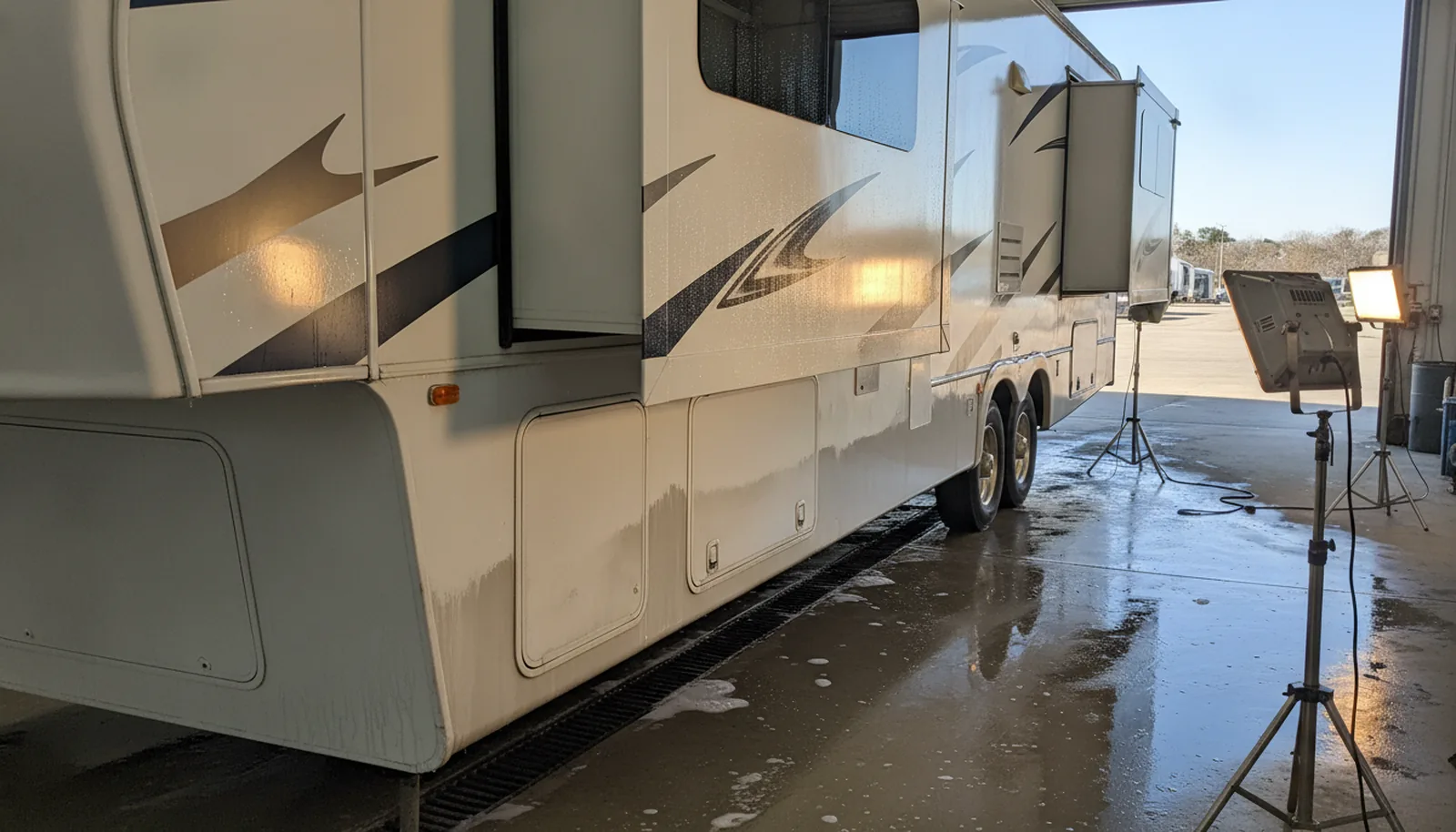
Last June I leaned against the front cap of a 34-foot fifth wheel in the bay and ran my hand down the side, thinking about what RV ceramic coating in Olathe would cost. My palm came back white, like I’d grabbed a stick of chalk. The owner stared at it and said, “I was hoping a ceramic coating would make it shiny again.” I shook my head, because RV ceramic coating pros in Wichita would tell you the same. Coating that mess would’ve locked in the oxidation and peeled within months. The detail that followed ran a couple of long days of correction and another few hours to apply the coating, which is why I tell folks to check what RV ceramic coating in Tucson costs before they assume it’s just a wipe-on. That’s why the honest answer to what an RV ceramic coating costs starts with a warning: most of the bill is the prep, not the coating, and if your comparing RV ceramic coating in San Diego, you’ll see the same pattern.
Nobody in Wichita will quote a coating without seeing the rig, but talking to a couple of RV ceramic coating pros in Wichita gets you real per-foot numbers, and if you want to compare pricing for RV ceramic coating across Kansas, that page breaks it down.
What an RV ceramic coating actually is, and why it’s not a shortcut
A ceramic coating is a liquid that chemically bonds to paint or gelcoat and hardens into a thin, glossy layer. It sheds water, resists UV and keeps dirt from sticking for longer than wax. On an RV it goes on the painted or gelcoat surfaces after the surface is clean and corrected.
That’s the part most owners miss. A coating magnifies whatever is underneath it. I’ve seen a neighbor’s travel trailer coated by a fly-by-night mobile guy without correction.
Before you call anyone, compare shops and road detailers from RV ceramic coating detailers nationwide.
RV ceramic coating cost per foot: what the numbers look like
Detailers price ceramic by linear foot of rig length. The spread is huge because condition is everything. Here’s a working table from price sheets I keep pinned in the shop, Florida to the West Coast.
| Rig type and length | Condition | Typical per-foot range | Notes |
|---|---|---|---|
| Camper van (18-24 ft) | Good paint, minor swirls | $25 - $45 | Small enough that flat quotes are common |
| Travel trailer (22-30 ft) | Light oxidation, decals | $30 - $60 | Decal edges add time |
| Fifth wheel (30-40 ft) | Moderate oxidation, full body paint | $40 - $75 | Correction drives the price |
| Class A (35-45 ft) | Good to moderate, tall sides | $50 - $100 | Ladder or lift access required |
| Toy hauler (25-40 ft) | Heavy oxidation, diamond plate | $60 - $125 | Often needs the most correction |
These ranges come from published price pages and my own quotes. A one-year basic coating might start around $24 a foot. A two-year coating with decontamination can run $100 a foot or more.
Kansas detailers tend to land mid-table because the sun is strong but the season is shorter. Compare RV ceramic coating across Kansas to see the local range before you drive to the next state.
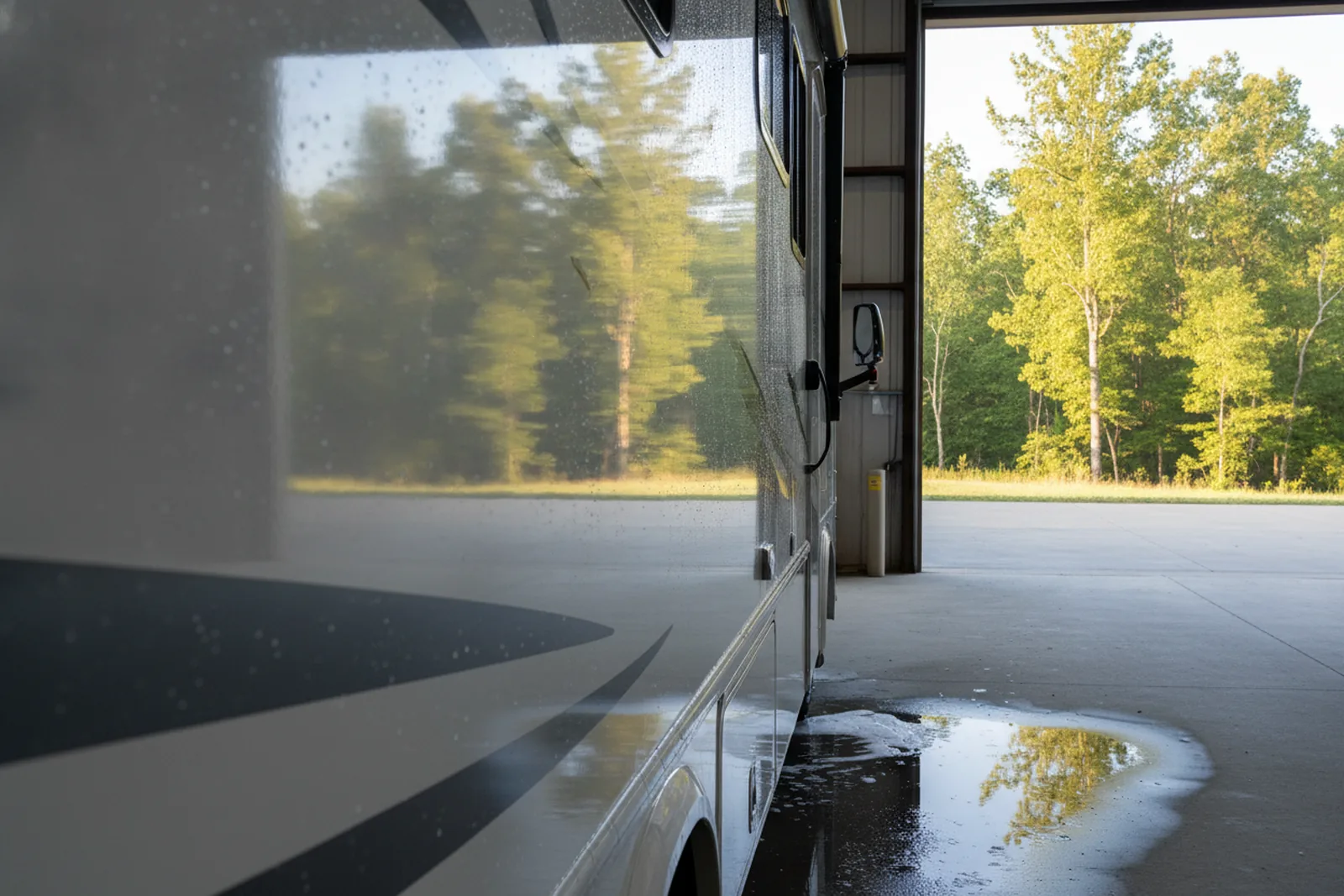
I found a straight talking video that breaks down what really drives the price, worth a watch before you call around.
Why prep is 70 percent of the ceramic coating bill
Prep is where the hours go, and here’s the order when a rig rolls into the bay:
- Wash and decontamination. Foam, rinse, clay mitt over every panel to pull rail dust and bugs. Two hours.
- Oxidation removal. Machine compound small sections, about 2 feet by 2 feet.
- Polish. Follow up with a fine polish to bring clarity back. One pass takes a day.
- Panel wipe. Solvent wipe to remove oils before the coating touches the surface.
- Coating application. Wipe on, let flash, level off.
If a quote sounds too cheap, its skipping one of those. I had a guy quote $900 on a 34-footer last month. The fine print said “no correction included.” That’s a wax job with a fancy name.
See RV detailing: what a full detail actually includes, from a shop with an RV bay for the baseline before coatings enter the conversation.
What really moves the price: oxidation, paint, layers, roof, glass and mobile vs bay
The same coach can quote $1,800 or $5,500 depending on six things.
- Oxidation level.
- Full-body paint vs gelcoat.
- Number of layers.
- Roof and glass included. Coating the roof is a waste on most rigs. Glass coatings help water run off the windshield but cost extra. Some shops quote a “complete” package that includes both.
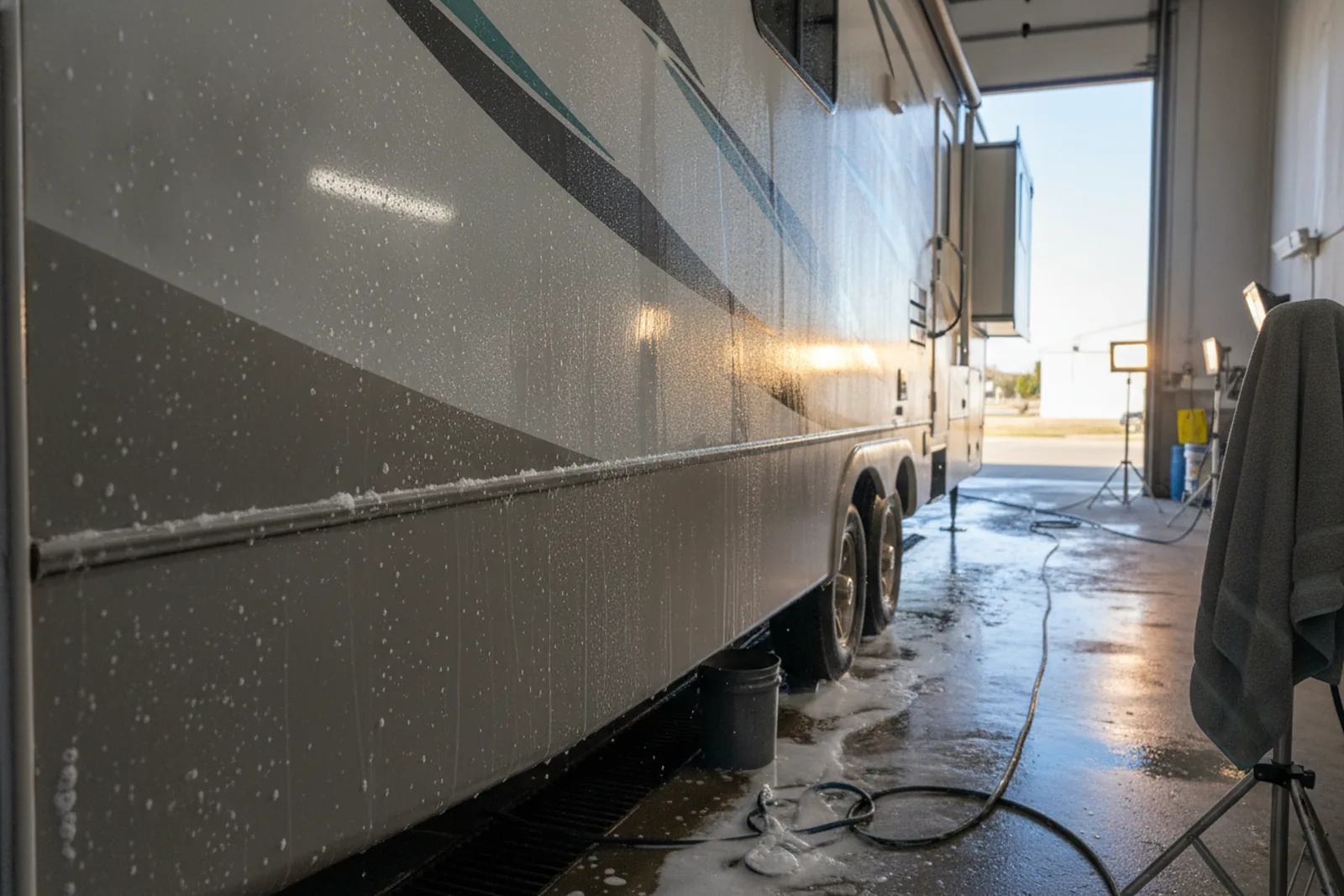
- Mobile vs shop bay. Mobile detailers work in the wind and sun and charge for travel. A bay with controlled lighting and no dust gives a better coating job. Wichita wind doesn’t help anyone apply a coating outdoors.
- Warranty terms.
The same package might include correction in one city and not in the next.
How to read a ceramic coating warranty without getting fooled
A coating warranty is a maintainance schedule disguised as a promise. Common terms:
- You must wash with a pH-neutral shampoo. One trip through a truck wash with hot high-pH soap can void the warranty.
- Claims must be filed fast, often within 30 days of noticing water doesn’t bead, and they usually pay by re-applying the coating, not refunding money.
- Most warranties don’t transfer if you sell the RV.
It’s not worthless. It makes you maintain the surface, which is what keeps it shiny. But it’s not a shield.
And coatings don’t stop rock chips. Nothing does. I cringe when I hear a sales guy say “never wax again.” You’ll still wash, still inspect, still touch up chips.
The wrong coating and other mistakes I see in the bay
- Coating over oxidation. The most common mistake.
- Applying in direct sun.
- Skipping the panel wipe. Oils from polish left on the surface stop the coating from bonding. It’ll sheet water for a month and then go flat.
- Coating the wrong surfaces. Plastic trim, rubber seals and unpainted diamond plate can stain or peel under some coatings. Windows need a glass-specific product. The coating on my own trailer’s awning was a mistake that left a sticky film.
If a previous coating failed, it has to be removed before a new one goes on. That’s offen a wet sand and re-polish job. It costs more than the first coating did.
Before you book, read how detailers price the whole job in RV detailing prices: what you pay per foot for a wash, wax, oxidation removal and ceramic. It’ll keep you from paying twice.
Lifespan claims: what I tell customers and what actually happens
In my experience a one-year coating on a Wichita rig that’s parked uncovered and washed quarterly can last a bit beyond a year, maybe 14 to 16 months. A two-year coating might go close to 24 months with wash additions. Heavy decontamination and proper prep add months. So does garaging, which almost nobody does.
That’s not a dig at coatings. It’s just what the sun and the wind do. I’ve coated my own 2020 travel trailer once, after two full days of correction. Two years later the sides are still glossier than a new gelcoat, but the front cap is starting to go flat from highway miles and Kansas sun. That’s normal, and it’s touch-up time.
A local shop with a proper RV ceramic coating in Olathe quote should include a re-coat price for down the road. Ask for it.
The weekend test I tell every coating customer to do first
Run your hand accross a clean, dry section of the side. If it leaves white dust on your palm, that’s oxidation and it has to be corrected before any coating goes on. A dry, smooth finish that don’t transfer chalk is a candidate. Then pull up two detailers with an RV bay, not just mobile guys with a spray bottle, and ask each for a written per-foot quote on the same rig. Make sure the quote separates correction, coating, and any roof or glass work. If one is $2,000 higher, ask what’s included. Often it’s two more days of compound work, and that’s the difference between a coating that lasts and one that peels by fall.
I’m willing to be wrong about this: I think half the ‘RV ceramic coating cost’ quotes online are lowball numbers for wash and wax with a coating name. Real coatings cost more because real prep costs more. Check the towel test first. Then make them show you the itemized invoice.
Related reading
FAQ
How much does it cost to ceramic coat an RV?
Most detailers price between about $24 and $100 per linear foot. A 30-foot travel trailer in good condition can run roughly $750 to $3,000 total. Heavy oxidation or tall motorhomes push the high end. Always get a written quote that separates correction, coating and any roof or glass work.
Is ceramic coating worth it on an RV?
It can be if the surface is properly corrected first. A good coating cuts wash time, protects against UV and keeps the finish glossy longer than wax. On a chalky, oxidized rig it's a waste of money because the coating seals in the damage and fails in months.
How long does RV ceramic coating last?
Expect roughly one to three years on an RV stored outside, depending on the coating, prep quality and maintenance. Warranty claims of five years and up often don't hold on a big rig in full sun. Plan on half to two-thirds of the advertised lifespan, in my experiance.
Can I ceramic coat an oxidized RV?
No. Oxidation must be removed first with compound and polish. Coating over chalky gelcoat locks in the oxidation, makes the finish look worse and causes the coating to peel or haze within months. Budget for correction before coating.
Do you need paint correction before ceramic coating?
Yes. Correction removes swirls, oxidation and water spots so the coating bonds to clean paint or gelcoat. Skipping it is the most common cause of coating failure. Most shops charge correction separately, from about $15 to $30 a foot or more, depending on the condition.
What's the difference between wax and ceramic coating on an RV?
Wax sits on the surface and lasts roughly one to four months. Ceramic coating bonds chemically and lasts a year or more. But wax is cheap and forgiving. Coating requires perfect prep, careful application and pH-neutral washing, or it fails sooner than wax woudl.
Can I apply RV ceramic coating myself?
You can, but DIY failure is common on big vertical surfaces. High spots, uneven flash and missed wipe-downs create permanent smudges. The prep work, especially oxidation removal on gelcoat, takes two or three full days for a beginner. Most RV owners are happier paying a pro.
Find RV detailers near you
Compare RV detailers and mobile washes in your city, then ask a few for a price.
Browse by stateOr jump to: RV ceramic coating · Roseville, CA · Kansas City, MO · Ocala, FL