Is RV Ceramic Coating Worth It? Honest Review After Two Florida Summers
By Nate Ferreira · November 1, 2026
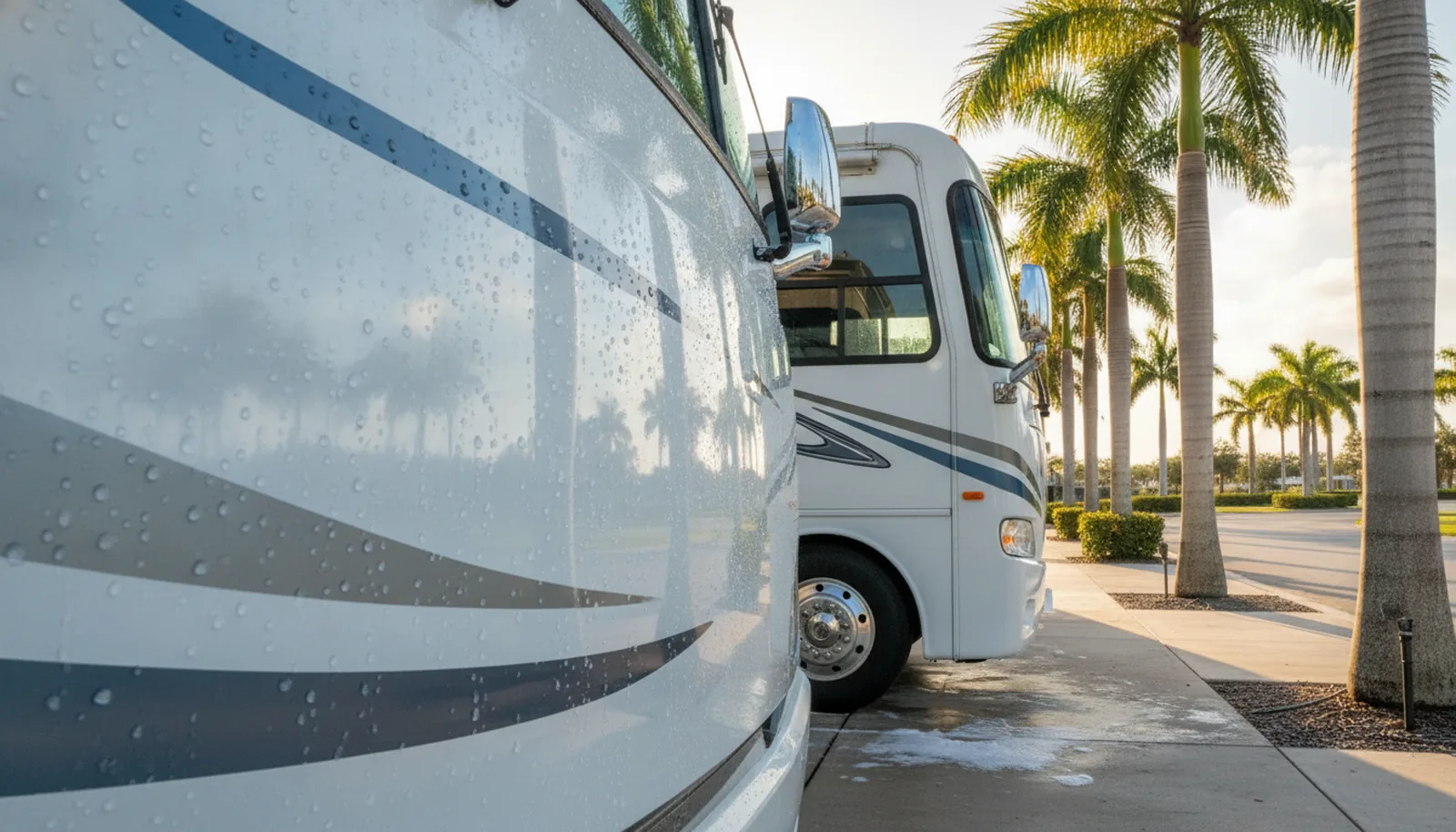
Last August I was up a ladder at an RV resort off Immokalee Road, rinsing the nose of a 2017 25-foot Class C that had been coated two summers before. The water sheeted right off and that white gelcoat stayed bright under the Gulf sun. Ten feet away sat a waxed coach the same age, and it looked like somebody had wiped it down with chalk dust. If your rig sits outside in Florida, the question isn’t whether RV ceramic coating pros in Naples can help. It’s whether the prep is honest and the price is right. That’s where comparing RV ceramic coating costs by state and city helps.
I’ve detailed boats and RVs in Naples for thirteen years.
What I actually saw: two coaches parked side by side in Naples
A client with a 32-foot travel trailer and his neighbor with a 31-foot Class C both bought new rigs the same spring, and I detailed both.
A coating won’t fill scratches or stop rock chips. But on a rig that lives in sun or salt air and gets washed monthly, it’s easier to maintain then wax. If you’re looking for detailers who do this work, you can compare RV detailers across Florida or check shops in Orlando, Fort Myers, and Jacksonville.
What RV ceramic coating is and isn’t
Ceramic coating is a liquid polymer that bonds to the surface and hardens.
What a coating does well:
- Easier washing. Bugs and grime release with less scrubbing.
- UV blocking. This slows fading and chalking on gelcoat.
- Gloss. A coated rig looks wet even when it’s dry.
- Chemical resistance. Bird droppings and tree sap don’t etch as fast.
What a coating doesnt do:
- Stop impact damage. Rocks and branches still chip the surface.
- Fix existing oxidation. Coating over chalky gelcoat locks in the damage.
- Make washing optional. Neglect still ruins the finish.
- Last forever. ‘Lifetime’ claims are usually warranty wording, not reality.
Coating, wax, or synthetic sealant? The table that ends the argument
Here’s how the three stack up for a typical RV kept outside in the South:
| Product | Prep effort | Cost category | Typical lifespan on an RV | Maintenance |
|---|---|---|---|---|
| Carnauba wax | Low | $10 to $16 per foot | 1 to 4 months | Reapplication, more washing between coats |
| Synthetic sealant | Medium | $13 to $20 per foot | 3 to 6 months | Reapplication, pH-neutral wash |
| Ceramic coating | High, includes correction | $24 to $100 per foot | 1 to 3 years claimed | pH-neutral wash, possible topper spray |
Prices vary by detailer and rig size. Get a written quote. For a deeper look at what drives the per-foot number, see our breakdown of RV ceramic coating cost.
The two-summer test I trust
I don’t do lab tests. The waxed coach faded on the door side first, where the afternoon sun hits hardest, and I saw it happen. The owner washed it every month and waxed twice a year. By the second August, the upper sidewalls showed a white haze you could see from twenty feet. And the coated trailer washed faster. I timed it one Saturday: 45 minutes for the trailer, almost two hours for the coach becuase of the extra scrubbing around the beltline, and the difference was clear.
Wax breaks down faster than peopel think in Florida heat and salt air. If you’d rather pay a pro, search RV ceramic coating by state and city to see options. Then ask for a written quote that includes correction, decontamination, and the number of coats.
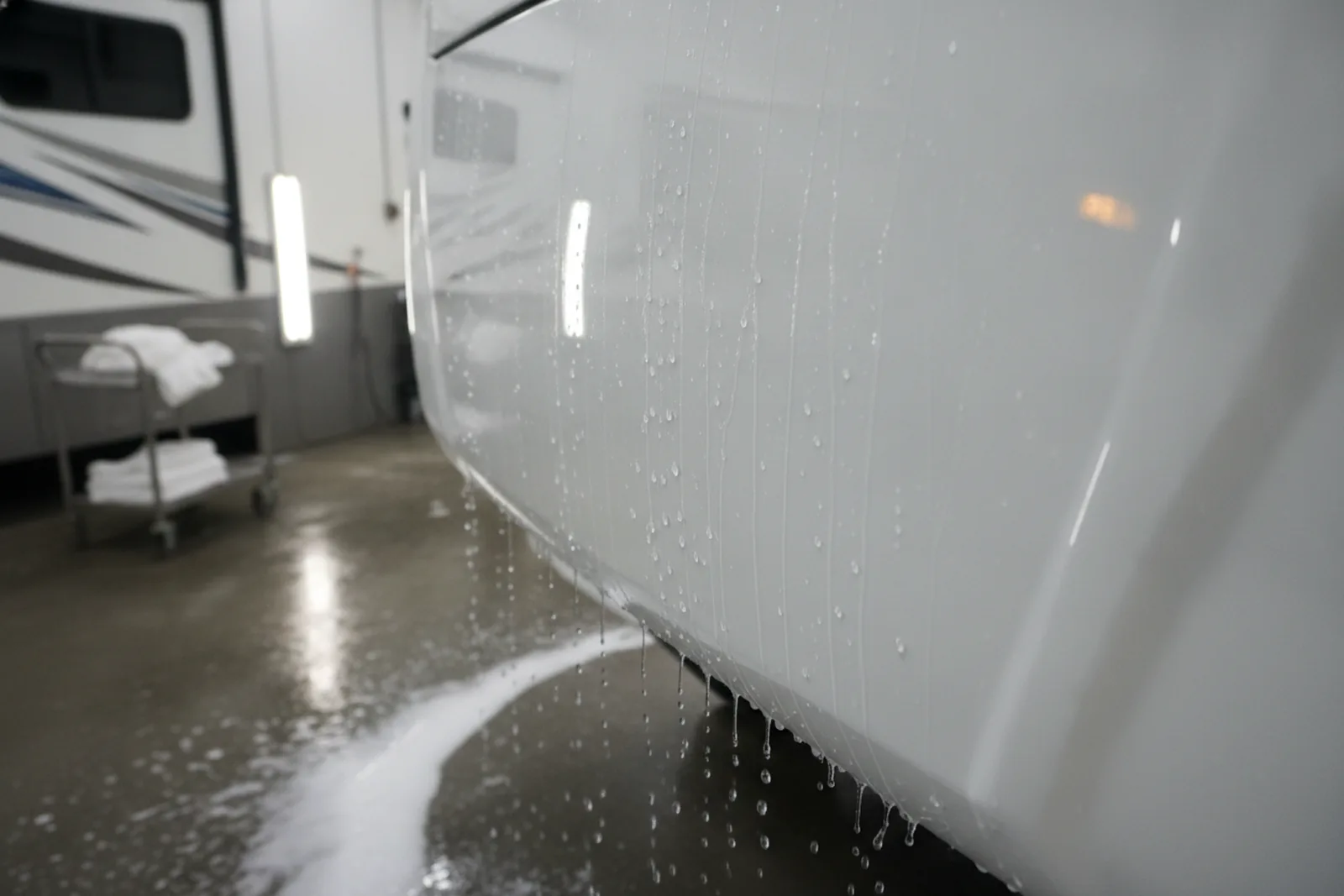
The prep that makes or breaks a coating
I burned through a gelcoat panel on a boat when I was new. Rotary buffer, wool pad, too much speed on a chalky front cap. The pad bit, the gelcoat turned brown, and I learned that correction is not aggressive polishing. It’s knowing when to stop. A detailer who quotes a coating without talking about oxidation removal is not your detailer.
If you’re considering a coating, here’s the prep order that matters:
- Wash and decontaminate. Clay bar or mitt to pull out rail dust and water spots.
- Compound only the oxidized areas. Work small sections, two feet by two feet.
- Polish to remove compounding haze.
- Wipe down with an IPA or coating prep spray.
- Apply the coating in thin passes, out of direct sun, below 90 degrees F.
DIY in Florida humidity is a gamble. The coating can flash too fast and streak. I’ve seen it happen on a 90-percent-humidity morning in July on a boat I was detailing. The panel looked like a smeared window. If you don’t have a shaded bay, pay a pro.
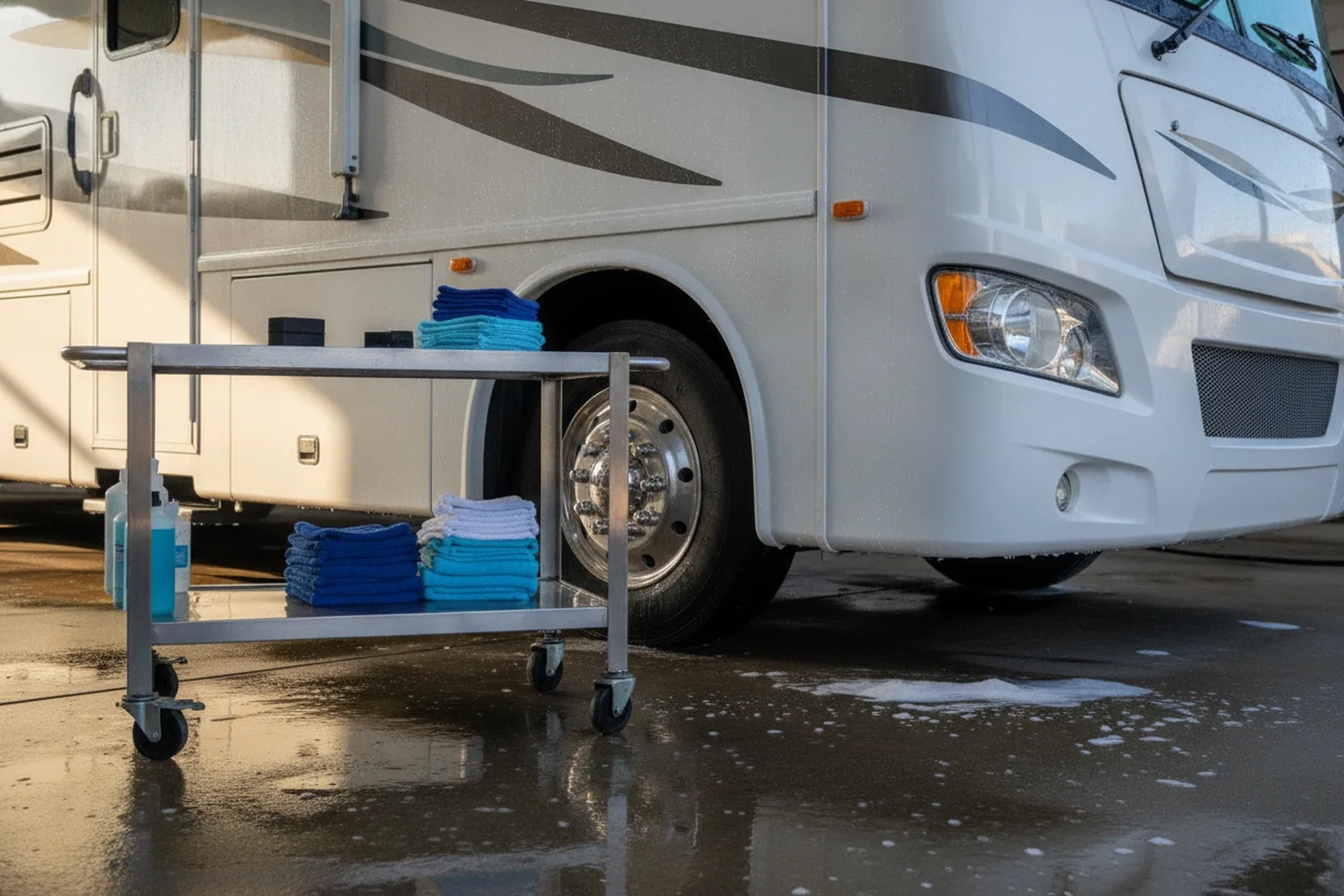
Who should skip ceramic coating
Not every RV needs a coating. If your rig is stored indoors or under a roof, wax or a sealant will do. If you wash your RV twice a year and let black streaks sit for months, a coating won’t save you. The deterioration happens under the coating, and the surface will still oxidize from neglect.
Here’s my honest list:
Skip coating if:
- Your rig lives in a garage or covered storage.
- You dont wash it at least monthly.
- The gelcoat is heavily oxidized and you’re not willing to pay for correction first.
- You plan to sell in the next year. The coating won’t return its cost at trade-in.
Consider coating if:
- You store outside in sun or salt air.
- You wash regularly and hate waxing.
- You have a newer rig or recently corrected gelcoat.
- You plan to keep the RV five years or more.
For what a full detail includes before a coating, see our post on RV detailing.
What a pro charges and what to ask
Flat rates in Florida for ceramic coating an RV run about $800 to $2,500. Per foot, I’ve seen $24 for a one-year coating with basic decontamination, and $100 per foot for a two-year coating with full correction. The huge spread comes down to three things: rig size, oxidation level, and whether the quote includes correction or assumes you did it.
Before you pay, ask these questions:
- Is compounding and polishing included? If not, what’s the per-foot cost?
- How many coats are applied and what’s the cure time?
- Do you need the rig overnight in a shaded bay?
- What’s the warranty in writing? Most cover coating failure, not scratches, and require annual inspections.
A ‘ten-year coating’ warranty that demands a paid inspection every year isn’t worth much if the shop goes out of buisness. Judge by the prep, not the paper.
I found a video from Tree Talker The Traveler that walks through the same decision on a motorhome, and it lines up with what I see in the bay.
What I’d do tomorrow if it were my Class C
If my 2017 Class C lived outside another Naples summer, I’d pay for correction and a two-year coating on it. I’d skip the fancy topper sprays and just wash it with a pH-neutral shampoo every three weeks. That’s the combination that keeps gelcoat bright with the least effort.
If you want to test your own rig before spending, do the towel test. Wipe a dry section with a clean microfiber. If the cloth comes up white, you have oxidation and you need correction before any coating. If it comes up clean, a light polish and a coating will lock in what you have.
Go pull up two or three mobile detailers or shops with an RV bay near you and ask each for a written per-foot quote on the same job: wash, decontaminate, light correction, one coat. See who talks abotu prep and who talks about shine. The one who talks about prep is the one to hire.
Keep reading
FAQ
How long does RV ceramic coating last?
On an RV stored outside, expect one to three years from a professionally applied coating. Florida sun, salt air, and frequent washing shorten the lifespan compared to a garaged car. Some shops claim longer, but read the warranty: most require annual inspections and exclude neglect.
Can you ceramic coat an oxidized RV?
No. Coating over oxidized gelcoat locks in the chalky layer and makes it harder to correct later. The oxidation must be compounded and polished off first. That correction is often the most expensive part of the coating job, but it's not optional.
Is RV ceramic coating better than wax?
For UV resistance and ease of washing, yes, if the surface is prepped correctly. Wax is cheaper upfront and can be applied by hand. Coating costs more because of the correction and labor, but it lasts longer and releases dirt better. The best choice depends on how often you wash and where you store the rig.
How much does ceramic coating an RV cost?
Florida flat rates run about $800 to $2,500. Per foot, expect $24 to $100 depending on the coating's claimed lifespan, the rig's oxidation level, and wether correction is included. Always get a written quote that lists prep steps and number of coats.
Can I apply RV ceramic coating myself?
Yes, but the prep is the hard part. You need a clean, shaded surface under 90 degrees F, and you must remove all wax and oxidation first. Florida humidity can make the coating flash too fast and streak. I've seen DIY jobs fail on hot mornings on boats and RVs. If you don't have a shaded bay, pay a pro.
What is the best ceramic coating for an RV?
I won't name brands, but look for a coating designed for gelcoat or fiberglass, not one marketed only for cars. A pro-grade coating with a two-year claim and a clear warranty is reasonable. More important than the brand is the prep: compounding, polishing, and decontamination before application.
Does RV ceramic coating prevent water spots?
It reduces them. Water beads and sheets off faster, so minerals don't sit as long. But in Florida's hard water, spots will still form if you let the rinse dry in the sun. Spot-free rinse or deionized water helps more. Coating makes the spots easier to remove later.
Find RV detailers near you
Compare RV detailers and mobile washes in your city, then ask a few for a price.
Browse by stateOr jump to: RV ceramic coating · Tucson, AZ · San Diego, CA · Orlando, FL