RV Polish vs Wax on Fiberglass: Which One Your Rig Needs
By Nate Ferreira · November 1, 2026
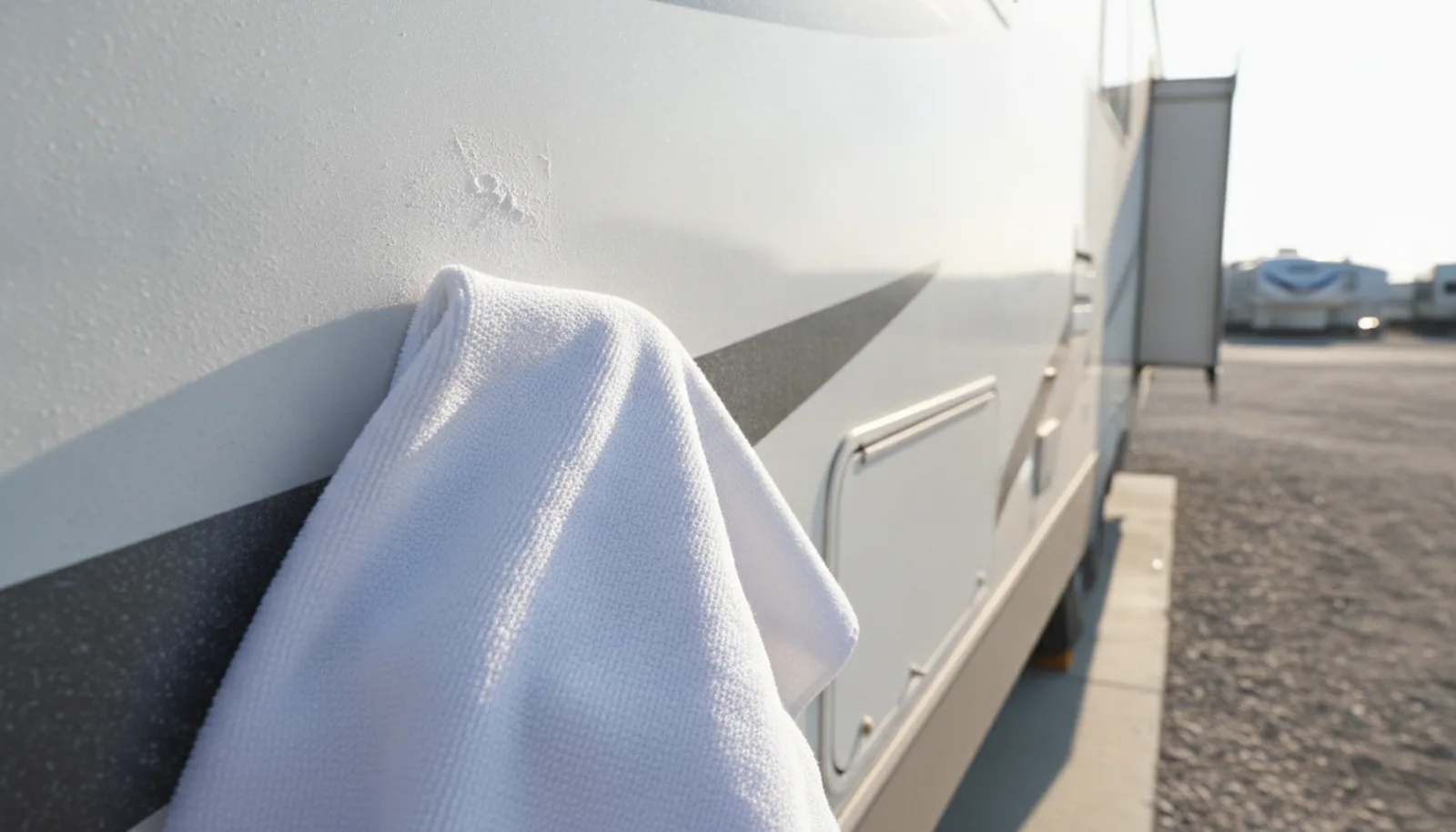
Last February a snowbird couple from Fort Myers backed their 2018 fifth wheel into my wash bay at a storage lot off Collier Boulevard. They’d found me through the page on RV wax and oxidation removal pros in Fort Myers. The nose cap had that flat, chalky look and the husband walked over holding a tin of paste wax, which I’ve seen about a thousand times doing RV wax oxidation removal across Florida. “We wax it every spring,” he told me. “Still looks like this.” I wiped a clean microfiber accross the fiberglass and held it up for him. White. That’s oxidation, not a wax shortage. Same stuff the pros deal with on RV wax oxidation removal in Tucson. If your rig does that, another coat of wax won’t fix anything. You need the straight answer on RV polish vs wax, and that’s what I’m going to walk through panel by panel, same as any shop doing RV wax oxidation removal in Port St Lucie would. Around Fort Myers, the RV wax and oxidation removal pros in Fort Myers will tell you the same thing once they put a towel on it.
The towel test tells you which product you need
I’m not selling you compound if a spray wax will do the job, and this test tells you which one you need. This test takes thirty seconds. Wash a small section of gelcoat, dry it off, and run a clean white microfiber across the surface with medium pressure. Towel stays white, the surface is clear and just needs protection. Wax, sealant, or a spray topper.
Towel picks up a little white chalk, you’re looking at light oxidation. A cleaner wax or one-step polish will cut that and leave some protection behind in a single pass. Towel comes back like you wiped a chalkboard, that’s heavy oxidation. Then it’s compound first, polish after, and protection on top. Cut first, protect last, in that order.
Most RV owners skip the test and wax right over the chalk, then wonder why the shine doesn’t last. That was the number one mistake I saw in my mobile days. Which is why comparing RV wax and oxidation removal detailers nationwide matters so much: the good ones do that same towel test before they quote you. You can also call the shops with an RV bay in Orlando for RV wax oxidation removal and ask their per-foot price to correct chalk before they wax. That correction is usually what your rig actually needs.
RV polish vs wax: what each product does on gelcoat
Straight breakdown, from compound down to spray wax. No brand names because the chemistry matters more than the label on the bottle.
| Product | Purpose | Abrasiveness | When to use | How long it lasts | By hand or machine |
|---|---|---|---|---|---|
| Rubbing compound | Cuts heavy oxidation and deep scratches | Coarse | Towel test shows heavy chalk, gelcoat is dull and rough | Correction step only, adds no protection | Machine strongly preferred, hand is slow |
| Polishing compound | Removes light oxidation, haze, and swirl marks | Fine | Towel shows light chalk or after compounding | Correction step only, adds no protection | Machine or hand, machine is faster |
| Cleaner wax (one-step) | Cleans, lightly corrects, and protects in one pass | Mild | Light chalk, want to save time | Roughly 1 to 4 months, similar to carnauba wax | By hand or machine |
| Carnauba wax | Protects and adds warmth and depth | None (pure wax) | Surface is clean and clear | 1 to 4 months, shorter in Florida sun | By hand pad or machine |
| Synthetic sealant | Protects with a harder, clearer layer | None | Surface is clean and clear | 3 to 6 months | By hand pad or machine |
| Ceramic coating | Long-term protection and easier washing | None (but needs perfect prep) | Surface is fully corrected | 6 months to 2+ years depending on product and maintenance | Professional application recommended |
Those lifespan numbers come from detailing industry estimates, mostly on cars, so treat them as a starting point. An RV sits outside in sun and rain, so in my experience you cut them by a third. That’s exactly why the detailed guide on how to wax an RV keeps saying panel-by-panel: you cant cheat the surface.
Polishing removes material: don’t do it for fun
This is the part where I wince watching owners go at their rig every spring with a rotary and a wool pad. Every pass with compound or polish shaves away a little gelcoat. You’re not adding shine. You’re taking off the dead top layer to get to the good stuff underneath. Do that too many times and you’ll go right thru the gelcoat to the fiberglass. That’s a repair, not a detail.
The gelcoat on a 25-foot Class C sidewall is about the thickness of a credit card over the laminate, and you don’t want to sand through it. I know a guy who compounded his nose cap twice a year for five years straight. By year three he had dull patches that never came back. The only fix was paint, not more polish.
The rule is: towel test first. Clear? Protect only. Chalky? Correct once, protect well, then maintain with a non-abrasive wash and a topper. Also, never run a machine polisher across your decals. The graphics manufacturers say non-abrasive cleaners only, and one edge of a spinning buffer will lift a decal quicker than a pressure washer.
Not sure if the chalk needs a full correction? Have a pro look at it. The RV wax oxidation removal across Florida shops and mobile guys do this all day long. They’ll quote per foot and tell you straight if it can wait a season.
How I correct and protect a chalky RV panel, step by step
Wash the rig first and get it dry. Then run a clay mitt or bar over the sidewalls to pull off tar, sap, and rail dust. Skip the clay and you’re just rubbing that grit into the gelcoat with your pad. After that, cover up. A cheap foam pad on a dual-action polisher will do more than a $300 bottle of compound worked by hand.
- Start with the least aggressive compound you have on a test spot. Work 2 feet by 2 feet. Wipe and check with a towel.
- If chalk remains, step up to a rubbing compound. If the towel comes clean, move to a polish.
- Polish with a fine pad and slow overlapping passes. This is where the shine comes back.
- Wipe the panel with a microfiber and inspect in different light. No haze, no swirls.
- Immediately apply your protection. Gelcoat left bare will start oxidizing again in weeks. Wax, sealant, or coating goes on while the surface is still clean.
If the whole coach is chalk, this is a multi-day job, so plan accordingly. One pro on a 45-foot coach planned two long days for wash, correction, and interior. Work in sections and keep the pad rotating. And if you don’t own a machine or a scaffold, the full RV detailing cost guide lays out what shops with an RV bay are asking. You may find the correction is cheaper then buying all the gear once, especially if you only do this every few years.
I found this video that shows a pro correcting oxidation and waxing, and it matches what I do in my own bay.
What I tell snowbirds about waxing over oxidized gelcoat
That couple from Fort Myers had been waxing over oxidation for four winters. The wax filled the pores a bit, so it looked decent for a month, and then the chalk came right back through. They were spending about $80 a year on paste wax plus a Saturday of work, and the gelcoat never got any clearer. When I finaly compounded one side wall, the color came back so much the wife asked if I’d painted it.
The next year they bought a $15 bottle of spray wax for after washes and left the heavy correction alone. That’s the right move: cut the chalk once, then protect. Same logic if you’re comparing RV wax oxidation removal in Tucson under that desert sun or Port St Lucie with the salt air. The chalk don’t care what state you park in, so the fix is the same everywhere.
My honest call on the next product to buy
One bottle for a new RV owner near the Gulf? Synthetic sealant, not wax. Wax looks great at the dock, but sealant holds up to afternoon thunderstorms and rinse-water minerals. For most rigs that pass the towel test with no chalk, a sealant twice a year keeps the gelcoat sealed. Add a spray wax as a topper after washes and you get that wet look without the annual arm workout.
Run the towel test on your own rig this weekend. Cheapest diagnostic in detailing. No chalk, protect only. Light chalk, cleaner wax if you’re lazy or one-step polish if you want it done right. Heavy chalk, stop waxing and start compounding. And if the towel comes back white, call two local RV detailers and ask for a written per-foot quote on the same correction. The numbers will tell you more than any label.
Related reading
FAQ
Can I just wax over chalky gelcoat?
You can but the wax won't last. The oxidized layer is dead gelcoat powder. Wax sticks to that powder and falls off. You'll get a few weeks of shine, then the chalk reappears. For lasting results, remove the oxidation with a compound or polish first, then apply wax or sealant.
How often should I wax my RV if it's outside?
For carnauba wax, plan every 1 to 4 months in harsh sun. Synthetic sealants last 3 to 6 months. RV makers offen suggest waxing 2 to 4 times a year. If you use a spray wax after each wash as a topper, you can stretch the main wax or sealant longer.
Do I need a machine to remove oxidation?
For light oxidation on a small spot, you can polish by hand, but a dual-action polisher with a foam pad will save you hours of arm work. For heavy chalk across a full sidewall, a machine is practically required. You can rent one or have a pro correct it.
Does polishing damage RV fiberglass?
Every polishing pass removes a little gelcoat. That's how it works: you abrade away the oxidized layer. Doing it evry year can eventually cut through the gelcoat to the laminate. Use the towel test and polish only when needed, not on a schedule.
Can I put ceramic coating over oxidation?
No. Coatings need a clean, corrected surface to bond. If you coat over chalk, the coating fails in months and you waste the money. Compound and polish first, then apply the coating. A good detailer will insist on correction before coating and quote it separately.
What's the difference between compound and polish?
Rubbing compound has coarse abrasives and removes heavy oxidation and scratches. Polishing compound is finer and removes light haze and swirl marks after compounding. Both leave the surface bare, so you must protect with wax, sealant, or coating immediately after.
Find RV detailers near you
Compare RV detailers and mobile washes in your city, then ask a few for a price.
Browse by stateOr jump to: RV wax & oxidation removal · Reno, NV · Scottsdale, AZ · Wichita, KS